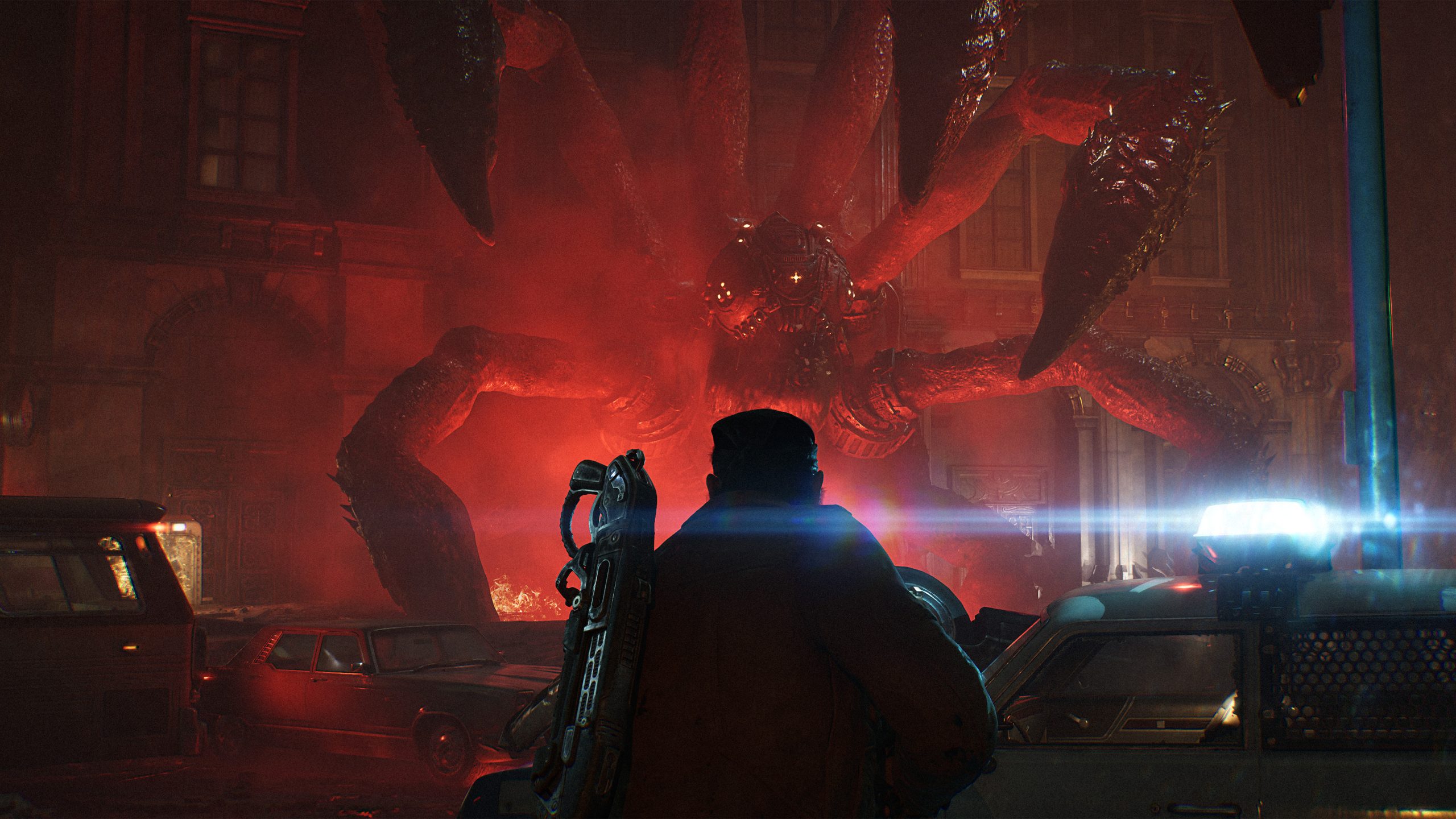
Gears of War: E-Day NVIDIA DLSS Performance Guide & Tips
Discover how to optimize Gears of War: E-Day with NVIDIA DLSS. Get expert performance tips, settings analysis, and benchmarks for the best visual experience.
Published: Gears of War: E-Day Wiki Editorial Team
Table of Contents
Master Your Experience: Gears of War: E-Day NVIDIA DLSS Optimization
Emergence Day has finally arrived, and with it, one of the most technically ambitious titles in the franchise's history. As you step into the boots of Marcus Fenix and Dominic Santiago in Gears of War: E-Day, you will quickly realize that the transition to Unreal Engine 5 is more than just a marketing buzzword—it is a complete overhaul of how lighting, geometry, and performance interact on your PC.
Understanding how to leverage Gears of War: E-Day NVIDIA DLSS integration is essential for maintaining a fluid frame rate while experiencing the game’s cutting-edge fidelity. Whether you are aiming for competitive multiplayer stability or a cinematic single-player campaign, mastering these graphical settings will bridge the gap between "playable" and "perfect."
Why Technical Optimization Matters in E-Day
This title is a significant leap forward in visual technology. Developers at The Coalition have built the game from the ground up, utilizing features like MegaLights for real-time dynamic shadows and Lumen for global illumination. These features are resource-heavy, making it vital for PC gamers to understand how to balance their hardware's output.
When you incorporate Gears of War: E-Day NVIDIA DLSS into your setup, you aren't just boosting your frames; you are using AI-driven neural rendering to maintain image stability in a title that demands high precision. Without proper tuning, you may find your GPU struggling to keep up with the explosive, particle-heavy set pieces that characterize the Locust invasion.
Understanding Graphical Presets and Impact
Before diving into advanced settings, it is helpful to understand the baseline performance expectation. Based on performance analysis, the game features five distinct quality presets. Below is a summary of how these presets affect your visual experience and performance overhead.
Quality Preset
Visual Fidelity
Performance Demand
Recommended Usage
Low
Basic shadows, reduced AO
Lowest
Older hardware, eSports tuning
Medium
Balanced detail
Moderate
Target for RTX 30-series GPUs
High
Sharp textures, rich lighting
High
Mid-to-high end hardware
Ultra
Cinematic lighting
Very High
Enthusiast-tier performance
Ludicrous
Maximum mesh/light data
Extreme
High-end 4K setups only
Tip
Avoid the Low Preset Trap
Community reports suggest that the Low preset significantly degrades shadow quality and ambient occlusion, resulting in a "flat", cartoony aesthetic. If you need a performance boost, try using Medium settings paired with DLSS Quality mode rather than dropping to Low.
Harnessing RTX Mega Geometry and Ray Tracing
One of the standout features of the PC version is the inclusion of NVIDIA’s RTX Mega Geometry. This tech is a game-changer for rendering complex surfaces like foliage and rubble piles—areas where Gears often struggled in previous generations.
How to use Mega Geometry
Check VRAM Requirements: This feature is exclusive to cards with at least 12GB of VRAM. If your card meets the spec, toggle it on in the Advanced Graphics menu.
Understand the Cost: Enabling this feature will result in an approximate 10% performance hit.
Visual Benefit: You will notice more accurate self-shadowing on trees and debris, providing a more cohesive, "lived-in" look to the battlefield.
Scaling Performance: DLSS, Frame Gen, and More
Gears of War: E-Day is commendably vendor-inclusive, supporting a variety of upscaling solutions. However, for GeForce RTX users, the combination of DLSS Super Resolution and Multi Frame Generation remains the gold standard for maintaining a 60 FPS+ target.
Performance Scaling Comparison
GPU Tier
Target Resolution
Recommended Settings
Expected FPS Range
Entry (e.g., RTX 3060)
1080p
Medium + DLSS Quality
60+ FPS
Mid-range (RTX 5070)
1440p
High + DLSS Quality + FG
80-100 FPS
Enthusiast (RTX 5090)
4K
Ultra + DLSS Balanced + FG
60-90 FPS
Why use Frame Generation?
Frame Generation (FG) uses AI to synthesize intermediate frames, effectively doubling your output fluidity without placing the entire load on the CPU. Because this game is CPU-intensive, utilizing FG is a reliable way to bypass bottlenecks in dense combat scenarios. Always ensure NVIDIA Reflex is enabled to keep input latency as low as possible when frame generation is active.
Expert Tips for a Competitive Edge
If you are playing the multiplayer mode, responsiveness is your top priority. While you might be tempted to turn all settings to Ultra to enjoy the lighting, competitive players often favor a middle ground.
Reflex is mandatory: Even if you aren't using Frame Generation, ensure NVIDIA Reflex is set to "On + Boost." It reduces latency significantly, which is critical for the timing-sensitive nature of the cover-based combat system.
Upscaling Choices: If you find the image looks slightly soft at native resolution, use DLSS Quality mode. It is the most stable upscaling solution currently available in the game, preventing the "boiling" artifacts that occur with older versions of FSR on lower-end hardware.
Keep Drivers Updated: As always, ensure you are using the latest Game Ready Driver for optimized compatibility with the game’s engine advancements.
For more technical data and in-depth benchmarks on different hardware, you can refer to the full performance analysis provided by Tom's Hardware.
Troubleshooting Common Visual Issues
Shadow Flickering: If you notice shadows flickering, ensure you are not using an outdated FSR fallback mode. Switching to DLSS or XeSS often resolves these issues.
Stuttering: Stuttering is often tied to CPU bottlenecks or VRAM overflow. Reduce your "Texture Quality" setting by one notch to see if it stabilizes the experience.
Mega Geometry Greyed Out: If you cannot toggle this, check your VRAM. If you have enough and it is still locked, restart the game, as some settings require a full client reload to initialize correctly.
Frequently Asked Questions (FAQ)
Does Gears of War: E-Day support NVIDIA DLSS 4.5?
Yes, the game includes native support for the latest DLSS tech, allowing for significant improvements in both frame rate and image quality compared to traditional rendering methods.
Can I use Frame Generation on older graphics cards?
While the game supports frame generation across various hardware, the most stable experience—and the most feature-rich support—is found on the latest RTX 50-series and 40-series cards. Always check the game menu to see if the option is active.
Why is the game so CPU-heavy?
The shift to Unreal Engine 5.8 with advanced systems like MegaLights and real-time destruction requires significantly more CPU calculation than previous titles. Using upscaling helps, but ensure your CPU meets the modern requirements.
Is there a recommended setting for the best balance?
For most users, a mix of "High" settings with "DLSS Quality" and "Reflex On" provides the best balance of visual fidelity and responsive, consistent performance across varied combat intensities.